
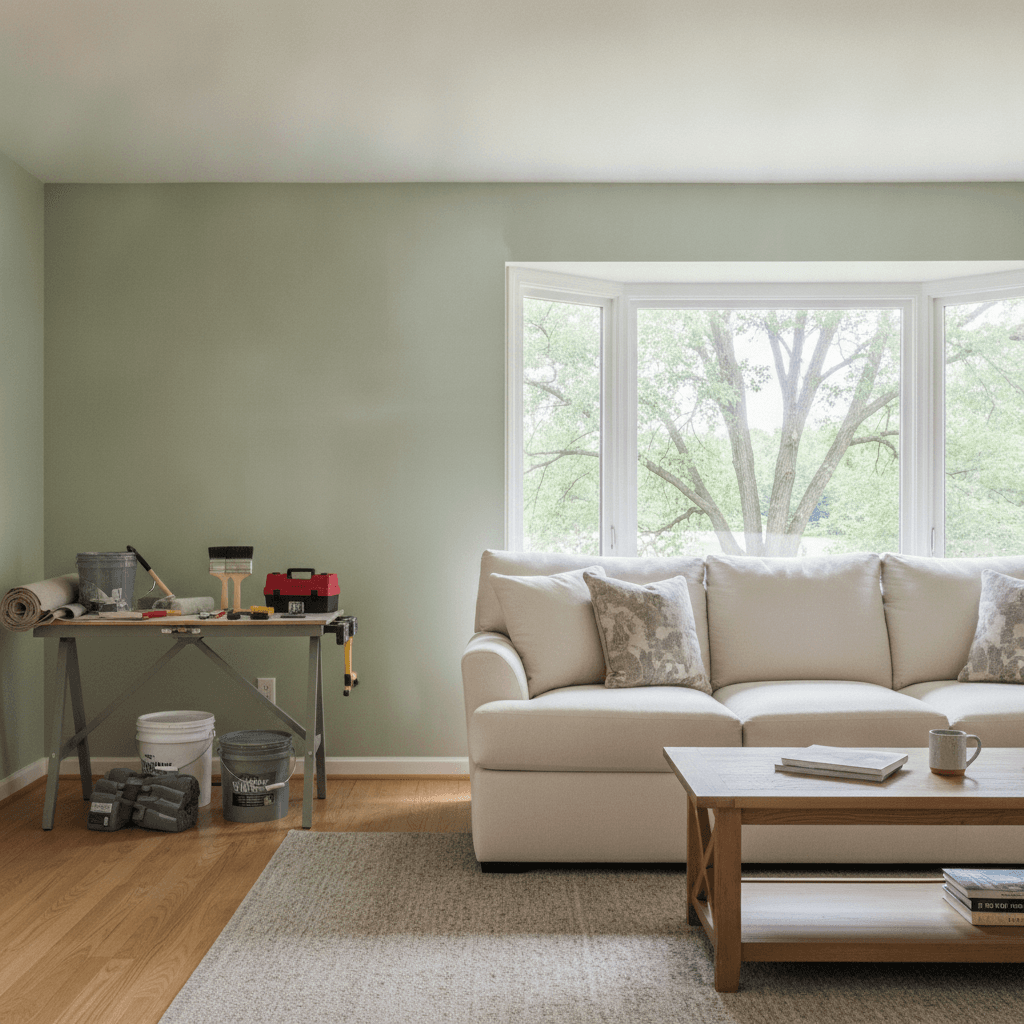
Drywall Repair in McHenry County, IL & the Northwest Suburbs
Most handymen patch the hole and leave you staring at the repair. We’re painters — we patch, texture-match, and paint it to blend, so the wall looks like nothing ever happened.
Free written estimate · an owner calls back within 24 hours · no pressure
Owner on site
Tim runs every crew
Written price
Line-item, no surprises
Two coats, always
Brand & line named
2-yr warranty
In writing
Repairs that disappear
Drywall patch and paint — fixed, finished, and painted by one crew
Level Best Painting repairs drywall and plaster across Huntley, McHenry County, and the Chicago northwest suburbs — and because we're painters, we finish the job: patch, tape, mud, sand, match the texture, prime, and blend the paint into the existing wall. Most drywall guys stop at "ready for paint," which leaves you a smooth square on a textured wall, a ring of bare mud, and a second contractor to find. When our crew packs up, the repair is gone, not just filled.
That matters extra here, where every February thaw sends ice-dam water through ceilings and every 1990s–2000s subdivision spends its first decades settling into cracks. One crew, one visit, no handoff. Tim built this company after a lifetime in home services and years of hiring trades for his own house flips and restoration jobs, and "the wall looks like nothing ever happened" is the only definition of done they accept. Small jobs welcome; we call back within 24 hours.
What we repair
- Ceiling water stains from ice dams and roof leaks
- Water-damaged ceiling and wall replacement (pipe and appliance leaks)
- Settling cracks over doors and windows
- Nail pops and screw pops
- Doorknob, anchor, and TV-mount holes
- Cracked tape seams and peeling joint tape
- Damaged corner bead
- Plaster crack and patch repair in older homes
- Texture matching — orange peel, knockdown, and popcorn blend-ins
- Skim coating rough or dated walls to smooth
Holes, cracks, nail pops, and punch lists
If it's a hole, crack, or stain in drywall or plaster, it's on our list — the same list Tim worked through on his own flips: doorknob holes, anchor and TV-mount holes left over from a move, settling cracks angling off door and window corners, nail pops working loose from studs, cracked tape seams, and damaged corner bead. And we handle the two repairs this region manufactures in bulk: water-stained and sagging ceilings from ice dams and roof or pipe leaks, and the webs of settling cracks that show up in the big 1990s-2000s subdivisions as the framing finishes drying out.
No job is too small to take seriously. A single doorknob hole gets the same process as a full ceiling replacement: cut out the damage, patch it right, and finish it so you can't find it later. If you've got a punch list of dings and holes — before a home sale, a move-out, or just years of living — we'll knock out the whole list in one visit. Tim ran a house-flipping business before this one; punch lists are home turf.
Ceiling water stain repair after ice dams and roof leaks
This is the signature Chicago-suburbs drywall repair. Snow piles on the roof, heat escaping the attic melts the underside, the water refreezes into a dam at the cold eave, and the next melt backs up under the shingles and into your ceiling. By March you've got a brown bloom on the drywall, bubbling paint, or a soft, sagging patch. Every thaw produces a fresh crop of them across McHenry, Kane, and Lake counties.
Here's how we fix it right: first, the leak source has to be resolved and the cavity dry — we'll tell you honestly if it isn't ready. If the board is sound, we seal the stain with a stain-blocking primer (ordinary paint lets water stains bleed straight back through, sometimes in weeks) and repaint the ceiling to a uniform finish. If the board is soft or sagging, we cut out the damaged section, replace it, tape and mud the seams, match the texture, and paint. Either way, the ceiling ends up looking like the winter never happened. If you want the full walkthrough of what happened above your ceiling and why paint alone fails, read our post on
Settling crack repair in the 1990s–2000s subdivisions
Huntley, Algonquin, Lake in the Hills, and the west sides of Elgin and St. Charles built thousands of homes in a couple of decades, and all of that framing lumber has been drying, shrinking, and settling ever since. Drywall tells on it: hairline cracks running off the corners of doors and windows, nail pops pushing through hallway walls, and seam cracks along ceilings — aggravated every year by the humidity swing between muggy July and bone-dry January, which works seasonal joints open and closed.
The fix that lasts is not smearing mud into the crack — that reopens within a season. We open the crack, tape it so movement can't telegraph through, mud in thin feathered coats, sand flat, match the texture, and then prime and paint the repair into the wall. None of this means anything is wrong with your house; it means the drywall needs one proper repair after the settling has done its thing — and if we ever see a crack that looks like more than settling, we'll say so and point you to the right person.
Plaster repair and skim coating in older homes
The older housing in Woodstock, Elgin, McHenry, and the historic cores of the river towns runs on plaster and decades of layered patchwork. Plaster repairs differently than drywall — cracks need to be stabilized, not just filled, and patches where plaster meets newer drywall from past remodels have to be blended so two eras read as one wall. We do that work, including skim-coating rough or dated walls back to smooth. Because most of these homes predate 1978, federal lead-safe rules govern how old painted plaster can be disturbed; we'll tell you at the estimate exactly what that means for your scope.
And this is where hiring painters for your drywall pays off. A patch-only handyman is done when the mud is sanded; you're done when the wall looks like nothing ever happened. Those are different finish lines, and the gap between them is texture matching, stain-blocking primer, and paint blended to a natural break — a corner or a full wall — so there's no flashing or sheen line where the repair used to be. Texture and paint are painter's work. We carry every repair through all of it, because the last steps are the ones we do every day.
How a drywall repair goes with us
- 1
Call or send the form — for most holes, cracks, and stains, a few phone photos (we'll ask for them when we call back) are enough for a written price. No visit needed.
- 2
Tim confirms scope and price — sagging ceilings, plaster, and skim coats get an in-person look. Either way the price is itemized and in writing before we start.
- 3
Repair day — floors and furniture covered, dust contained, damage cut out or stabilized, taped and mudded in feathered coats, texture matched. Joint compound needs drying time, so larger repairs get a short second visit — your estimate says which.
- 4
Prime, paint, walk through — stain-blocking primer over anything water touched, paint blended to a natural break, and we check it in the room's real light with you before the drop cloths come up.
What drywall repair costs
Nationally, HomeGuide and Angi put a typical drywall repair around $200–$750, with a single small hole about $50–$400 and ceiling repairs $150–$1,000 depending on size and texture; the Chicago-area average they report is roughly $600 (published 2026 figures, not ours). Three things move the price: how big the damage is, whether there's texture to match, and how far the paint has to be blended — a patch, a wall, or a whole ceiling — to make the repair invisible. Bundling repairs into one visit is the cheapest way to buy this work: a punch list of six holes doesn't cost six times one hole. You get an itemized written price before we start, and if a spot repair won't hide, we'll tell you the honest fix is repainting the wall — before, not after.
2-year workmanship warranty, in writing on every estimate — if our paint peels, blisters or flakes because of how we prepped or applied it, we come back and fix it at no cost.
Who shows up on your job
Tim — the owner — and the crew he runs in person, on site every day. Your job isn’t handed off to a subcontractor you’ve never met: the person who quoted it is the person on the ladder and the person responsible for it, he does the final walkthrough with you, and you’ll have his direct number for the whole project. Level Best isn’t a franchise — Tim ran three and built this to be the opposite. Meet Tim →
Drywall repair — common questions
There's a brown water stain on my ceiling from an ice dam. Can you just paint over it?
Not just paint — water stains bleed through ordinary paint, sometimes within weeks. Once the leak is resolved and the board is dry, we seal the stain with a stain-blocking primer and repaint the ceiling to a uniform finish. If the drywall is soft or sagging, we cut out and replace the damaged section, match the texture, and paint. We'll tell you honestly which repair yours needs.
How much does drywall repair cost?
It depends on the size of the damage, the texture involved, and whether we're blending paint into a patch or repainting the wall or ceiling. Published national figures put a typical repair around $200–$750; a few small holes cost far less than a water-damaged ceiling with texture. We don't quote blind — send the form or call, and you'll have a clear written price, for most small jobs without a visit. Small punch lists bundle well into one trip.
How long does a drywall repair take?
Small holes and cracks are usually one visit — patch, dry, sand, texture, prime, and paint. Water-damaged ceiling sections, plaster work, and skim coats take two visits, because joint compound has to dry between coats and texture has to cure before paint. Your written estimate says which one yours is.
My house is only a few years old and already has cracks over the doors. Is something wrong?
Almost certainly not — cracks angling off door and window corners in newer subdivision homes are normal settling as framing lumber dries, worked open and closed by our big seasonal humidity swings. The fix is to tape and mud the crack properly (not just fill it), match the texture, and paint. If we ever see something that looks structural rather than cosmetic, we'll tell you straight.
Can you match my wall texture?
Yes — that's the half of the trade patch-only outfits skip. We identify the pattern and weight, test the spray off the wall first, and build it up until the patch disappears into the surrounding surface: orange peel, knockdown, and popcorn blend-ins included. On old plaster we skim and blend so repaired and original wall read as one.
Can I just patch it myself?
A nail hole, sure. Where DIY goes wrong is everything after the mud: sanding it flat, matching the texture, and painting so there's no flat spot or sheen line — fresh paint on an old wall flashes. If you already tried and you're looking at a lump or a shiny square, send us a photo; nobody judges, and it's a quick fix for painters.
Do you fix the leak too?
No — the roof, ice-dam, or plumbing source has to be resolved by the right trade first, and the cavity has to be dry. We'll tell you plainly if it isn't ready, and we won't close up a wet ceiling. Once it's dry, we handle everything from the drywall out.
Is paint included, or do I need a painter afterward?
Included — that's the point of hiring painters for drywall. We prime the patch and paint it, blended to a natural break so there's no outline or sheen difference. One crew, one visit, actually finished when we leave.
Drywall repair near you
Run from Huntley, office in Crystal Lake, working across McHenry, Kane, Lake and northwest Cook counties. Each town page covers the repairs its housing stock produces most.
Repainting the whole room anyway? See our interior painting service — repairs are included in the prep.
Got a hole, a crack, or a stained ceiling?
Send the form or call. An owner calls back within 24 hours, and for most small repairs a few phone photos are enough to price it without a visit. Small jobs welcome; punch lists bundle well into one trip.
Free written estimate · an owner calls back within 24 hours · no pressure