
The Best Time to Paint Your House Exterior in the Chicago Suburbs
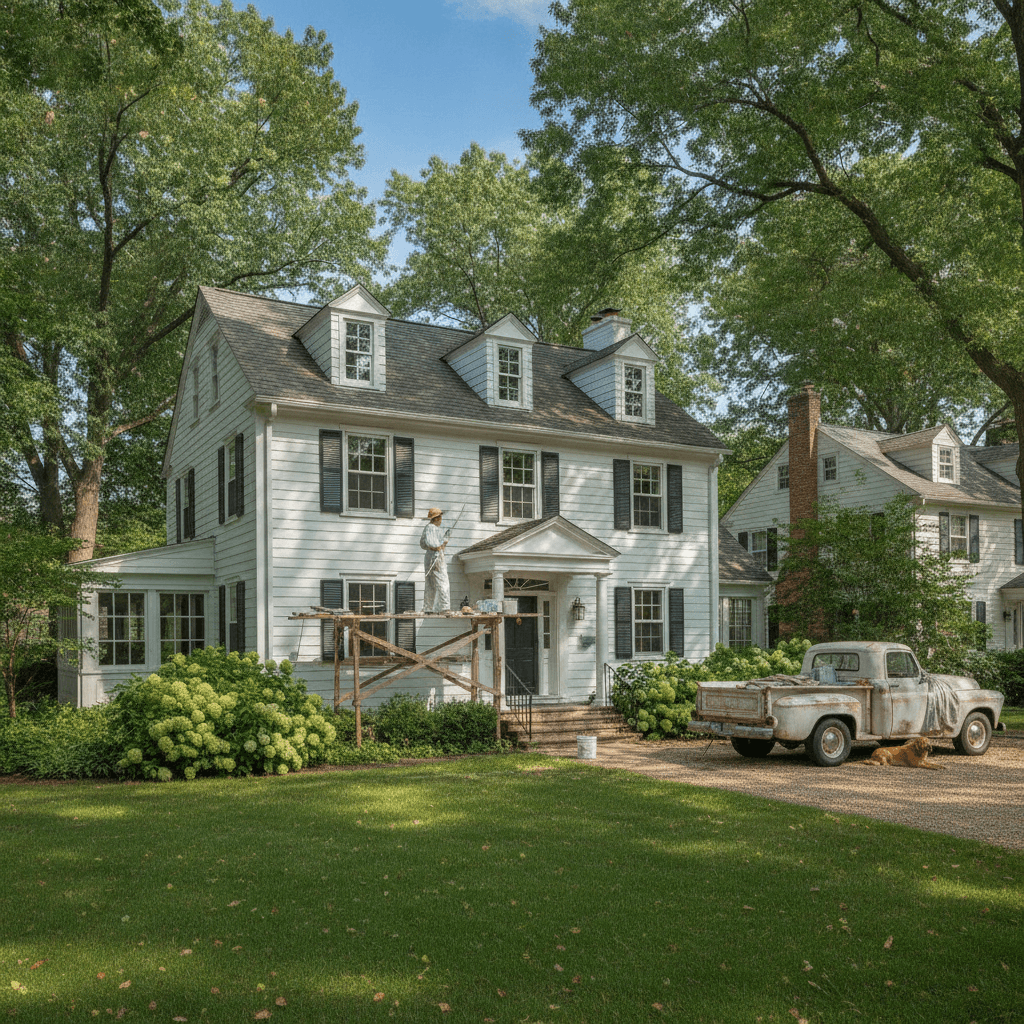
If you live in the northwest suburbs, you already know our weather doesn't do gentle transitions. We go from polar vortex to pool weather with about two good weeks of spring in between, and that has real consequences for exterior paint — both for when it can be applied and for how long it survives once it's on the house.
I've scheduled a lot of exterior work over the years — first as a house flipper hiring painting crews for my own projects, now running my own — and the timing rules haven't changed. Here's how they work.
The window: May through early October
The reliable exterior painting season in northern Illinois runs from roughly May through early October, with June through September the most dependable stretch.
That's not tradition — it's chemistry. Most quality exterior paints need surface temperatures of at least 50°F to cure properly, and they keep curing for hours after application, which means overnight lows matter as much as afternoon highs. A 60-degree April afternoon that crashes to 33 overnight can ruin a coat that looked fine going on. Paint applied in conditions that are too cold doesn't form a proper film; it can crack, peel, and fail years earlier than it should.
Humidity sets the other boundary. Chicago summers can run muggy, and when humidity climbs past roughly 70%, paint dries slowly, can sag, and traps moisture in the film. That doesn't shut down July and August — it just means a good crew watches dew points and plans which side of the house to paint when, instead of racing the weather.
Why freeze/thaw makes timing matter more here
In mild climates, a slightly rushed paint job limps along for years. Here, it gets found out the first winter.
Northern Illinois crosses the freezing point dozens of times each winter. Every crossing is a little crowbar: moisture seeps into any hairline crack in the paint or caulk, freezes, expands about 9%, and pries the gap wider (here's the full mechanism of how freeze/thaw destroys exterior paint). Then it melts, more water gets in, and it happens again. By spring, a marginal paint job has peeling trim and split caulk lines.
This is why the quality of conditions during application matters so much in our climate. Paint that cures fully in warm, dry weather forms a tight, flexible film that resists that cycle. Paint that went on cold, or over damp wood, or too late in the fall, has weak spots — and freeze/thaw finds every one of them.
Month by month
March–April: Estimate season. Too early to paint most years, but the perfect time to get quotes, pick colors, and lock a slot. Prep-only work sometimes starts late April in a warm year.
May: Season opens. Temperatures are usually reliable by mid-month, though we watch overnight lows early on.
June–August: Prime time. Long days, warm nights, predictable curing. The main variables are heat waves (we'll chase shade around the house) and humidity spikes (we schedule around them).
September: Excellent, and quietly the best month of all — warm days, lower humidity, fewer storms. But it's usually spoken for by people who booked in spring.
October: The closing window. Early October often works; by late October, overnight lows make quality curing a gamble we won't take. Better to be first on next year's list than last on this year's.
November–April: Exterior season is over. This is when interiors, cabinets, and drywall repair happen — and honestly, winter is the best time for all three.
The part nobody tells you: book by March
Here's the thing about a five-month painting season: every good crew in Chicagoland is working the same five months. The summer calendar fills fast, and by the time the first genuinely warm weekend rolls around and everyone looks at their peeling trim, the good crews are quoting September — or next year.
The homeowners who get the best dates, the least schedule pressure, and the most careful work are the ones who get estimates in January through March and lock a slot before the season opens. As a flipper, I learned this the hard way more than once, standing on a porch in April trying to find a decent crew with a summer opening. There wasn't one.
What if your paint is failing right now?
If you've got active peeling, bare wood, or split caulk in the middle of winter, you don't have to just watch it get worse. A couple of practical notes:
- Bare wood exposed by peeling is absorbing moisture with every thaw. If it can't be painted yet, it's worth having someone assess whether temporary protection makes sense.
- Split caulk around windows and doors is letting water into the wall assembly. That's a spring priority, and it should be on your painter's prep list — ask specifically.
- Get on a calendar now. Failing paint in February plus a March booking equals a May fix. Failing paint in February plus a June phone call equals watching it all summer.
Timing is half the job — prep is the other half
One last honest note: the best-timed paint job in the world still fails early if the prep was rushed. Washing, scraping, sanding, priming bare wood, and re-caulking every joint winter opened up — that's the work that decides whether an exterior lasts four years or twelve, and it's exactly what our exterior painting prep includes. When you're comparing quotes, ask each painter what their prep includes. The answers will tell you a lot.
I built Level Best Painting after years of hiring crews for my own house flips and checking exactly that kind of work. If you're in Huntley, Algonquin, Crystal Lake, McHenry, or anywhere in the northwest suburbs and thinking about an exterior project, we're glad to take a look, give you a straight answer on timing, and get you a free estimate — we return every call within 24 hours.
Want a summer exterior slot?
Exterior calendars in the northwest suburbs fill by March. Get your estimate now — free, in writing, callback within 24 hours.